
Path of Exile 2 Waystones & Atlas Guide — Tiers, Crafting, and Sustain
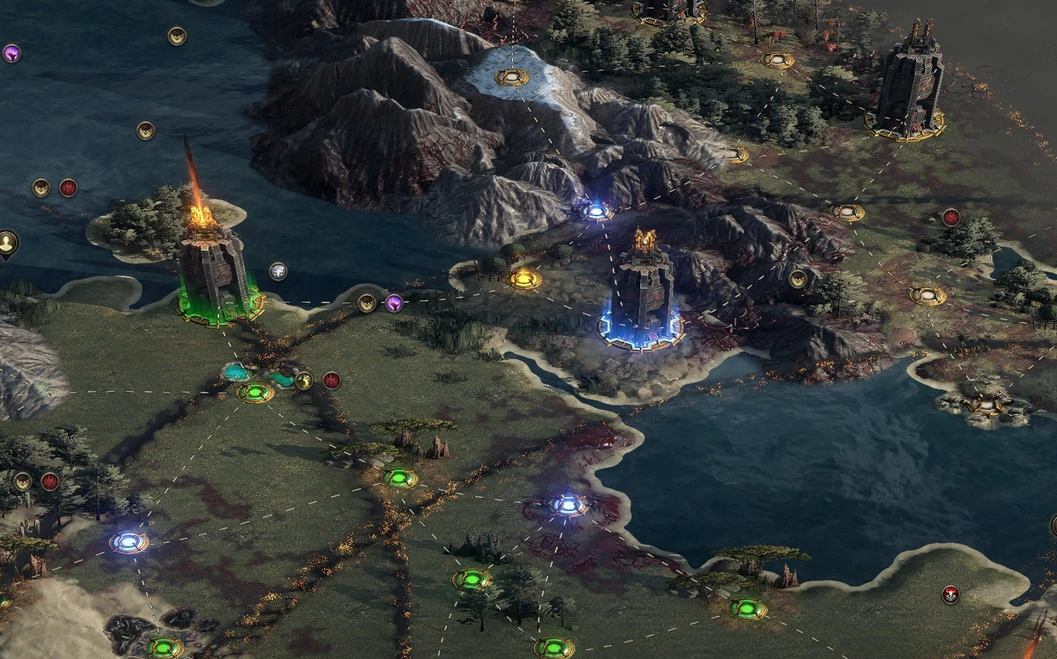
Path of Exile 2's endgame runs entirely on the Atlas of Worlds — an ever-expanding map structure you access using Waystones. If PoE1's map system felt familiar, forget most of it: PoE2 changed enough about how maps, tiers, and Atlas progression work that it's worth learning fresh rather than assuming your old habits carry over. This covers the whole system in depth: what Waystones actually are, how tiers work, how to keep from running dry, and how the Atlas itself progresses.
What a Waystone Actually Is
A Waystone is a single-use item that opens a map through the Map Device, located at the Ziggurat, and later on from your hideout when you unlock one. You unlock map access around level 65, after completing all three interlude acts and speaking to Doryani. Every Waystone has a tier, and that tier is the single biggest factor in a map's difficulty — monster levels start around 65 at the lowest tiers and climb steadily as tier increases, meaning a Tier 12 Waystone throws meaningfully tougher enemies at you than a Tier 3 one, independent of anything else about the map.
Tiers run from 1 through 15 as standard drops. A Tier 16 Waystone exists too, but you can't just find one directly — the only way to get one is corrupting a Tier 15 Waystone with a Vaal Orb and having that be the outcome, which makes Tier 16 maps a genuine rare, high-risk endgame target rather than something you work toward incrementally like every tier below it.
Crafting Waystones Like Any Other Item
This is the part that catches PoE1 players off guard the most: Waystones aren't just a difficulty dial, they're craftable items you roll currency on, exactly like a piece of gear. Prefixes on a Waystone increase your rewards (extra rarity, more chests, that kind of thing). Suffixes increase danger — but importantly, danger correlates with more and higher-tier Waystone drops, so a suffix-heavy map is also how you sustain your supply going forward. A Rare Waystone can carry up to three prefixes and three suffixes, six modifiers total (some show as combined "hybrid" lines that count as a single modifier despite displaying as two, so don't assume a waystone showing extra lines has broken the normal cap).
The basic tools for this are the same core currency you'd use on gear: an Orb of Transmutation upgrades a plain Waystone to Magic rarity with a modifier, an Orb of Augmentation adds a second, and a Regal Orb pushes it to Rare with a third. Later, a Chaos Orb lets you reroll a modifier you don't want. If you're purely trying to progress through tiers without adding real danger, running a Waystone with prefixes only (no suffixes) is a legitimate, lower-risk way to do that — just know you'll get fewer Waystone drops back out of it in exchange.
Combining Waystones at the Reforging Bench
If you're sitting on a surplus of one tier and running dry on the next, the Reforging Bench solves it directly: combine three Waystones of the same tier, and you get back one Waystone a tier higher. This is one of the most reliable tools for pushing through a stubborn tier wall, and it's worth actively using rather than just hoping for organic drops once you notice a particular tier building up in your stash.
Sustain: Not Running Dry
Running out of Waystones mid-session is the single most common frustration new mappers hit, and it's almost always caused by climbing tiers faster than your Atlas passives and drop rate can support. A few concrete things that help:
- Doryani sells Waystones, and critically, his stock refreshes every time you level up. He sells a tier below your current highest completed tier — so the moment you clear your first Tier 7, for example, buy a few Tier 6s from him as a safety buffer rather than relying purely on drops.
- Prioritize Atlas passives that boost Waystone drop chance and the odds of a Waystone dropping one tier higher, especially early. This is consistently the first thing experienced players path toward on a fresh Atlas tree, before chasing juicier reward modifiers.
- Keep a reserve. Don't push every single Waystone you own to your current highest tier — hold some back at a tier you can clear safely, so one bad map doesn't end your session's ability to keep playing.
- Buy backup stock at key milestones. A common practice is stocking up on the tier below whenever you cross a meaningful threshold (commonly cited: around Tier 6, Tier 11, and Tier 14), since those are points where a bad run without a buffer costs you the most momentum.
Death, Portals, and Losing a Map
Every map you enter has a limited number of portals. Dying costs you one. Once you've used them all, the zone resets entirely — any extra content, mechanics, or progress inside that specific map is gone, and you need a fresh Waystone to try again. This is why pushing into a tier your build genuinely can't handle safely is expensive in a very concrete way: it's not just a wasted Waystone, it's a wasted map's worth of everything you would have gotten from it.
Because of this, the generally-recommended approach is conservative: only move up a tier after several clean, controlled clears at your current one, rather than pushing the moment you technically survive a harder map once.
Map Bosses
After recent patches of POE 2, now every map contains a Map Boss — a significantly juiced-up version of a campaign boss, marked with a distinct icon once you're close enough. You can route around a Map Boss entirely if you want to, but you'll leave real loot on the table doing so, and defeating them is also one of the ways you earn Atlas Passive Tree points. Some Atlas passives specifically increase your odds of a map containing a Powerful Map Boss — worth prioritizing if you're actively hunting them rather than leaving it to chance.
The Atlas Passive Tree and Precursor Fortress
Separately from your character's own passive tree, the Atlas has its own enormous passive tree that affects your maps rather than your character directly — things like map danger, reward types, and Waystone sustain all route through it. You earn points toward it in a few ways: completing Map Bosses, clearing "Corruption Nexus" encounters scattered across Waystone tiers, and completing a handful of different unique maps (repeating the same unique map doesn't count twice — variety matters here, not repetition).
The Precursor Fortress is a major structure you find via a Precursor Tower while exploring the Atlas — the first Tower you encounter reveals a large Fortress nearby, and working through it is how you access the deeper endgame questline, including eventually the Enigma Chambers (which specifically require Tier 10 Waystones to enter) and the path toward Pinnacle bosses like the Arbiter of Ash and Arbiter of Divinity.
Don't Neglect Chaos Resistance
This is a genuinely important PoE2-specific detail: Chaos damage deals double damage to Energy Shield, and a lot of endgame monsters deal significant Chaos damage. Standard advice is to keep Fire, Cold, and Lightning resistance capped at 75% as always, but also treat Chaos resistance as a real stat to build toward rather than an afterthought — aim for roughly 40-50% by the time you're running Tier 6 Waystones, and push toward 75% as you approach Tier 11 and beyond.
Practical Farming Tips
- Fully clearing every monster in a map is only worth the extra time if you've actually juiced that specific map — otherwise, focus on your real objectives (rares, the boss, mechanics you're farming) and move on.
- League mechanics you encounter in a map (Breach, Ritual, Expedition-style content, etc.) are optional and can be genuinely dangerous, especially on a build that isn't fully online yet. A common approach: clear the map's core objective and boss first, then circle back to the league mechanic afterward if you still want it — that way a risky mechanic going badly doesn't cost you the map's guaranteed progress too.
- Available tiers directly in your catalogue for whatever you're running: Tier 4, Tier 5, Tier 6, Tier 7, Tier 8, Tier 9, Tier 10, Tier 11, Tier 12, Tier 13, Tier 14, Tier 15, and Tier 16 for the rare corrupted top end.
Quick Recap
Waystones gate every map you enter, and their tier — not the map itself — is the main difficulty knob. Craft them deliberately (prefixes for reward, suffixes for danger and better sustain), reforge three of the same tier into one higher when you're stuck, and lean on Doryani's refreshing shop plus early Atlas passive investment to avoid running dry. Respect the portal/death system by climbing tiers conservatively, don't skip Chaos resistance, and work toward the Precursor Fortress once your Atlas is developed enough — that's your gateway to the actual endgame Pinnacle fights.
Continue Reading: More Path of Exile 2 Guides