
Path of Exile 2 Runes & Soul Cores Guide — Sockets, Augments, and What to Use Where
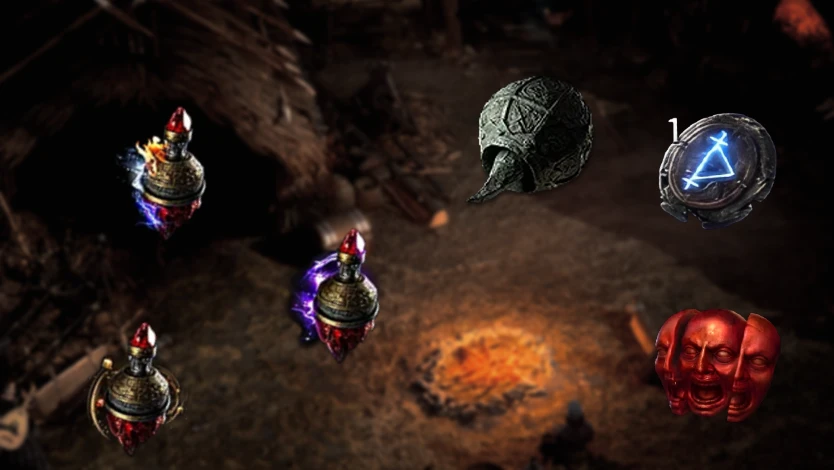
Path of Exile 2 doesn't have PoE1's socket-linking, gem-coloring minigame at all. If you're coming from the original game expecting to manage six-linked chest pieces and hunt for the right socket colors, forget everything you know — PoE2 sockets exist for exactly one purpose: holding Augments. There are three kinds — Runes, Soul Cores, and Idols — and which one goes where, and when, is one of the more consequential decisions you'll make while gearing up. This guide covers the whole system in depth: how sockets work, what each Augment type actually does, how to farm the endgame ones, and where to actually put them for maximum effect.
How Sockets Actually Work
Almost everything drops completely unsocketed. That's a deliberate design choice — it means the base item you're wearing and the sockets on it are two entirely separate upgrades, and you control when and how you add the second one.
Which slots get sockets, and how many:
- Weapons and Body Armor: up to 2 sockets each
- Gloves, Boots, and Helmets: 1 socket each
- Shields and Foci: can also carry sockets
- Quivers and pure caster jewelry generally don't
To actually add a socket to an item, you need an Artificer's Orb. You get these by combining 10 Artificer's Shards, which themselves come from salvaging socketed gear you don't need at the Salvage Bench — so the system is partly self-sustaining once you're regularly picking up and dismantling gear. Apply the Artificer's Orb directly to the item you want socketed, and it adds one.
There's also a riskier route: a Vaal Orb can push an item's socket count beyond its normal cap. The catch is that Vaal Orbs corrupt whatever you use them on, locking the item from any further modification and carrying a real chance of an outright negative outcome. It's a legitimate endgame gamble on an item you've already finished crafting, never a first move.
Worth knowing: in high-tier Maps, gear has a small chance to simply drop with more sockets than its normal cap — an item that would normally max out at 2 sockets can occasionally be found with 3, and a 1-socket item can occasionally be found with 2. A handful of Unique items also come with extra built-in sockets beyond the standard limit as part of their design, so don't assume every socket count follows the general rule once you're deep into Uniques.
Runes: Your Primary Tool for Most of the Game
Runes are the Augment you'll be using constantly from the early campaign through your first real maps. They drop from any monster in the game — no special encounter required — and come in three standard tiers: Lesser, Normal, and Greater. You upgrade between tiers at the Reforging Bench by combining three Runes of the same type, the same "three of a kind becomes one of the next tier" pattern you'll recognize if you've played the original game's currency system.
A typical Rune grants a straightforward, predictable bonus — a flat resistance boost, added elemental or physical damage, a defensive stat. They're not exotic, and that's exactly the point: they exist to solve immediate, concrete problems. If your Fire Resistance is 20% short of where it needs to be for the area you're in, a Rune is very likely the fastest fix available, and there's no reason to hoard them while you wait for something better — better options keep showing up as you progress anyway.
Once you're deep into endgame Maps, a further category shows up: Endgame Runes. These are meaningfully stronger than standard Runes, drop specifically in Maps rather than the open campaign, and a handful are exclusive to The Ezomyte Megaliths, a unique map. One important asymmetry: Endgame Runes cannot be upgraded at the Reforging Bench the way standard-tier Runes can — what you find is what you get, so treat them as a direct find rather than a stepping stone toward something better.
A few real examples currently available, spanning both the common early tiers and the stronger endgame ones: Countess Seske's Rune of Archery, Craiceann's Rune of Recovery, Craiceann's Rune of Warding, Farrul's Rune of Grace, Farrul's Rune of the Hunt, Fenumus' Rune of Agony, Hedgewitch Assandra's Rune of Wisdom, Lady Hestra's Rune of Winter, and Saqawal's Rune of Erosion. If you'd rather skip the combining step entirely, Greater-tier Runes are also available to buy directly: Greater Rune of Alacrity, Greater Rune of Leadership, Greater Rune of Nobility, and Greater Rune of Tithing.
Soul Cores: The Endgame Step Up
Soul Cores are where the system gets genuinely build-defining. Where a Rune gives you a flat, predictable stat bump, a Soul Core can grant a modifier type that simply doesn't exist anywhere else in the game — ailment scaling, Spirit, item rarity, and other effects that are specifically gated behind this system. That power comes with real scarcity: Soul Cores are meaningfully rarer than Runes, and most are limited to one per character, meaning you can't just stack the same powerful effect across every socket you own. Planning which single copy of a given core goes where is part of actually building around them.
A detail worth internalizing early: many Soul Cores behave completely differently depending on whether you socket them in a Weapon versus in Armor. The exact same core isn't interchangeable across slots the way a Rune usually is — check what a specific core does in the slot you're actually planning to put it in before committing it, since assuming it'll behave the same everywhere is a common and costly mistake.
How to actually farm them — Trials of Chaos. This is the single reliable source for Soul Cores, and it's available from fairly early in the campaign all the way through deep endgame. You access a Trial through an Inscribed Ultimatum, which drops from enemies as you play — both during the campaign and later in maps. Using one opens a Trial encounter structured as a series of escalating challenge rounds: each round, you choose modifiers that make the fight harder in exchange for better potential rewards, similar in spirit to the original game's Ultimatum league mechanic. Before committing to a harder round, the Trialmaster shows you a preview of what you'd actually get — always check this before pushing further, since the risk of failing (and losing progress on that Trial) climbs quickly, and it's not always worth it for a middling reward. As a general rule, higher-tier Trials produce better Soul Cores along with more valuable currency and fragments, so if you're specifically farming Soul Cores rather than just playing through content organically, seeking out higher-tier Trials specifically is worth the extra difficulty.
Examples currently available: Atmohua's Soul Core of Retreat, Cholotl's Soul Core of War, Citaqualotl's Soul Core of Foulness, Estazunti's Soul Core of Convalescence, Guatelitzi's Soul Core of Endurance, Hayoxi's Soul Core of Heatproofing, Opiloti's Soul Core of Assault, and Quipolatl's Soul Core of Flow.
Ancient Soul Cores: The Real Chase Item
For players pushing the absolute top end of gearing, a regular Soul Core can be upgraded further into an Ancient Soul Core using a Core Destabiliser, an item found specifically in Atziri's Temple content. This is a genuine high-risk, high-reward crafting step, not a guaranteed upgrade — the Destabiliser carries a real chance of destroying the Soul Core outright instead of transforming it. Only attempt this on a core you're genuinely prepared to lose, never on something irreplaceable to your current build. Ancient Soul Cores are rarer still than regular Soul Cores and share their own separate one-per-character-style limit, so the same planning discipline applies, just at an even higher stakes level.
Idols (Formerly Talismans)
Idols are the third Augment category, and they work differently from both Runes and Soul Cores in one important way: each Idol only functions in one specific gear slot. A Rune or Soul Core is generally slot-flexible (subject to the weapon-vs-armor caveat above); an Idol is not — it's built for exactly one place, and socketing it anywhere else simply won't work. They drop from Azmerian Wisp-possessed monsters, and like most Soul Cores, the majority are limited to one per character. Before you commit an Idol to a socket, double-check the slot it's actually meant for — this is an easy, low-effort thing to verify and a costly thing to get wrong given that sockets aren't freely reversible.
Socketing Priority: Where to Actually Put Things
Given that most players will have more good Augments available than sockets to put them in, especially in the mid-game, prioritizing matters:
- Weapon first. Weapon sockets tend to offer the biggest raw offensive gains — increased damage, penetration, critical strike bonuses, attack or cast speed, and other modifiers that scale directly with your build's core damage output. If you only socket one thing well, make it this.
- Body Armor and Helmet next. These usually carry the most valuable defensive modifiers or broadly useful utility effects, and are the natural second priority once your damage is sorted.
- Gloves, Boots, Shields, and Foci last. Treat these as fine-tuning slots — covering a specific missing resistance, adding sustain, or rounding out a build that's already solid everywhere else, rather than a priority to fill immediately.
Permanence: What Changed, and What Didn't
Socketing an Augment used to be completely irreversible in earlier versions of the game — once something went in, it stayed forever. That's since changed: you can now overwrite an existing socket with a new Augment. The important nuance is that doing so destroys whatever was previously socketed there — it's a replacement, not a removal-and-storage. Practically, this means a cheap early Rune is fine to swap out casually the moment something better comes along, but a rare, one-per-character Soul Core or Ancient Soul Core should be treated as a real commitment. Think through the build implications before you socket one, not after.
Common Mistakes to Avoid
- Socketing a Soul Core into the "obvious" slot without checking its Weapon-vs-Armor behavior first. The same core can do two very different things depending on where you put it — verify before committing, especially with a one-per-character item you can't easily replace.
- Burning an Idol in the wrong slot. Since Idols are strictly single-slot, doing this wastes the item entirely rather than just underperforming.
- Hoarding Runes too aggressively early on. They're common and meant to be used — solving an immediate resistance or stat problem now is almost always worth more than saving a Rune for a hypothetical better use later.
- Gambling a genuinely valuable Soul Core on a Core Destabiliser without a backup plan. Since destruction is a real possible outcome, only do this with a core your build can afford to lose.
Quick Recap
Runes solve immediate, concrete problems throughout the campaign and early maps, cost little, and are meant to be used freely. Soul Cores are the endgame's real build-defining tools, farmed specifically through Trials of Chaos, and worth planning around given their scarcity. Ancient Soul Cores are the top of that ladder, created at genuine risk via a Core Destabiliser. Idols round things out with slot-specific, conditional bonuses. Get your socketing priority right — weapon, then armor and helmet, then everything else — and this system does a lot of the heavy lifting for your build's power without needing a single Chromatic or Fusing Orb anywhere in the process.
Continue Reading: More Path of Exile 2 Guides