
Path of Exile 2 Currency Guide — Every Orb, Essence, and Omen Explained
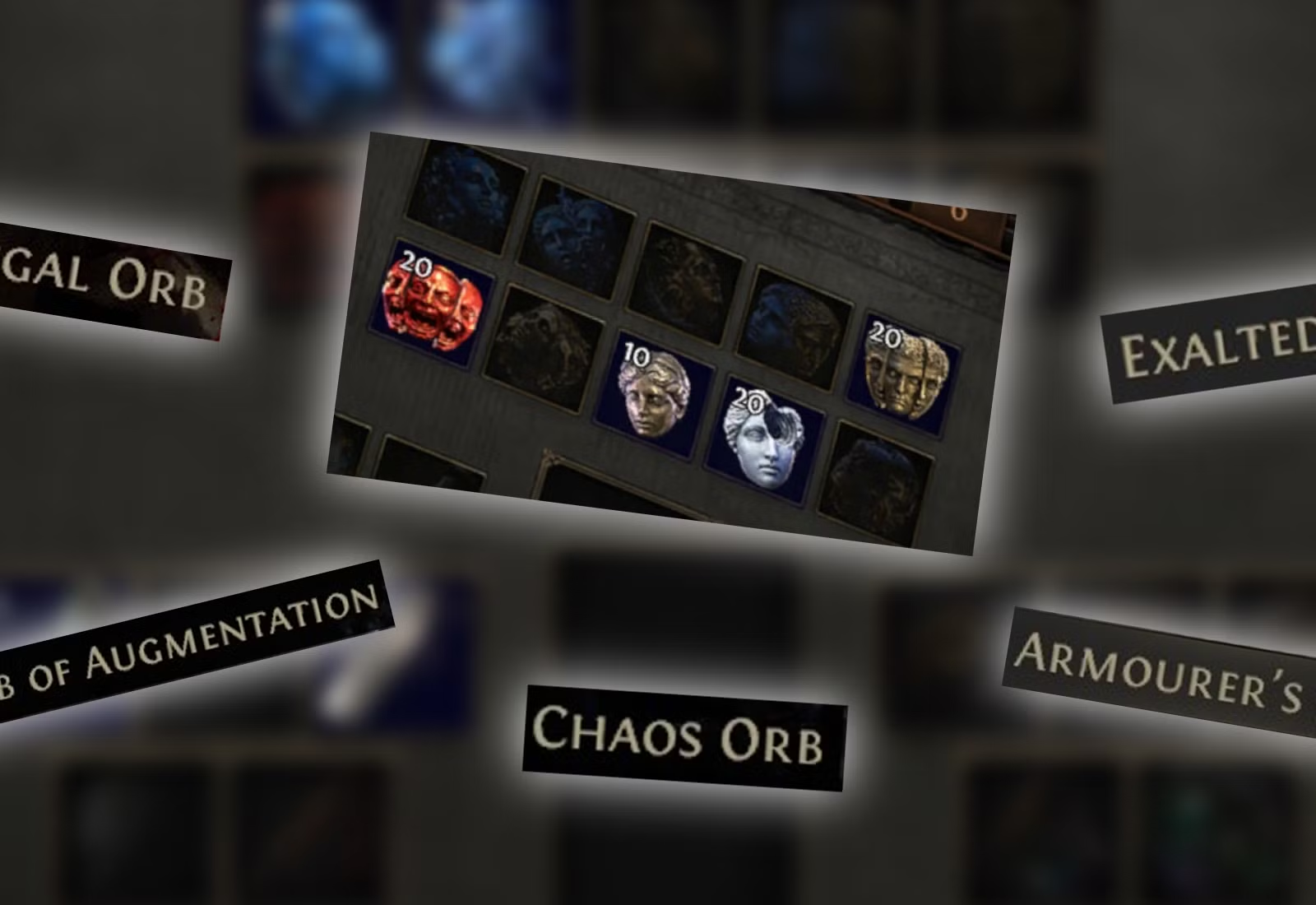
Currency is the backbone of Path of Exile 2 — it's how you craft, upgrade, and trade for gear, and it works meaningfully differently from PoE1's system. Here's what every core currency type actually does, current as of the Runes of Aldur league.
The Basic Crafting Sequence
- Orb of Transmutation — upgrades a Normal (white) item to Magic (blue) rarity.
- Orb of Augmentation — adds a second modifier to a Magic item that only has one.
- Regal Orb — upgrades a Magic item to Rare (yellow), adding one more random modifier in the process.
- Orb of Alchemy — jumps a Normal item straight to Rare with four guaranteed modifiers, skipping the steps above entirely.
A common deliberate crafting method is "alt-regal": Transmute → Augment → keep using Orbs of Alteration until you hit the specific modifier you want → Augment again → Regal. It's more steps than an Orb of Alchemy, but gives you actual control over which modifier survives onto the finished Rare item.
The High-End Orbs
- Exalted Orb — adds a new random modifier to a Rare item without touching its existing ones. This is PoE2's bulk trading currency, the equivalent role Chaos Orb played in the original game.
- Chaos Orb — removes one random modifier from a Rare item and adds a new one in its place. More surgical than PoE1's version (which rerolled everything), but still a gamble — it can just as easily remove a good modifier as a bad one.
- Divine Orb — rerolls the numeric values of existing modifiers within their allowed range, without changing which modifiers you have. Best saved for an item whose modifier types are already right but whose rolls could be better.
- Orb of Annulment — removes one random modifier. Sounds counterproductive, but it's a real advanced-crafting tool, especially when paired with an Omen that controls which type of modifier gets removed.
- Vaal Orb — corrupts an item, permanently locking it from any further modification. Corruption can add a powerful bonus or an extra socket, but it's entirely random and irreversible — always the last step, never an early one.
- Orb of Chance — upgrades a Normal item to Unique rarity, or destroys it. Pure gamble, best used on bases with a specific desirable Unique you're chasing.
- Mirror of Kalandra — the rarest currency in the game, creates a perfect duplicate of an item. Genuinely once-in-a-league territory for most players.
Essences
Essences didn't exist in PoE1 and are a core part of PoE2's crafting toolkit, not an optional side system. Applying a regular Essence to a Normal item upgrades it to Magic and guarantees a specific modifier type — Essence of Battle and Essence of the Body are two common examples. Greater Essences (Greater Essence of Battle) go a tier further, upgrading a Magic item straight to Rare with that guaranteed modifier already included — meaning they double as a more deterministic alternative to a plain Regal Orb when you already know exactly what your build needs. Perfect Essences (Perfect Essence of Battle) push the guaranteed modifier to its strongest possible roll. There are also standalone specialty essences like Essence of Delirium tied to specific league content rather than the standard tier ladder.
Omens
Omens are a genuinely new PoE2 concept: rather than being applied directly, they sit in your inventory and automatically trigger the next time you use a matching currency item, steering the outcome. Omen of Sinistral Crystallisation and Omen of Dextral Crystallisation are a good example of the pattern — "sinistral" and "dextral" Omens consistently mean "affects the left/prefix side" versus "the right/suffix side" of an item's modifiers across the whole Omen family, which is what makes Annulment and Exalted crafting genuinely controllable instead of pure RNG. Omen of the Blessed and Omen of Sanctification are two of the more specialized ones worth knowing by name if you're crafting seriously.
Catalysts
Catalysts add a specific type of Quality to jewelry (rings, amulets, belts) that boosts certain modifier categories rather than raw defense or damage — named after the Beyond-invasion bosses from the wider Path of Exile universe: Chayula's Catalyst, Tul's Catalyst, and Adaptive Catalyst (a flexible option that boosts whichever modifier type is already strongest on the item) among them. Refined versions of each exist for a stronger effect per application.
Runes of Aldur: Alloys
The current league's signature new mechanic is Runeforging, built around Verisium (a stackable material used to add Ward, a defensive buffer layer, to your gear) and Alloys — a currency type that replaces a random existing modifier on an item with a guaranteed one, similar in spirit to Essences but themed around the league's rune-based crafting rather than the standard tier ladder. Adaptive Alloy, Celestial Alloy, and Cyclonic Alloy are three you'll come across — each tied to a different modifier category, so which one you want depends entirely on what your specific item needs.
A Few Practical Notes
- Sockets in PoE2 work differently from PoE1 — everything starts white and auto-links, so there's no Chromatic Orb or Fusing/Jeweller's-linking minigame anymore. Jeweller's Orbs still exist, but purely for adding sockets, not coloring or linking them.
- Regal Orb has a narrower use case than it sounds — it's genuinely most useful early or as a deliberate final step in an alt-regal sequence, not a generic "always improve this" tool.
- Never use a Vaal Orb, Chaos Orb, or Divine Orb on an item you can't afford to lose the good rolls on — all three carry real risk to existing good modifiers.
Continue Reading: More Path of Exile 2 Guides